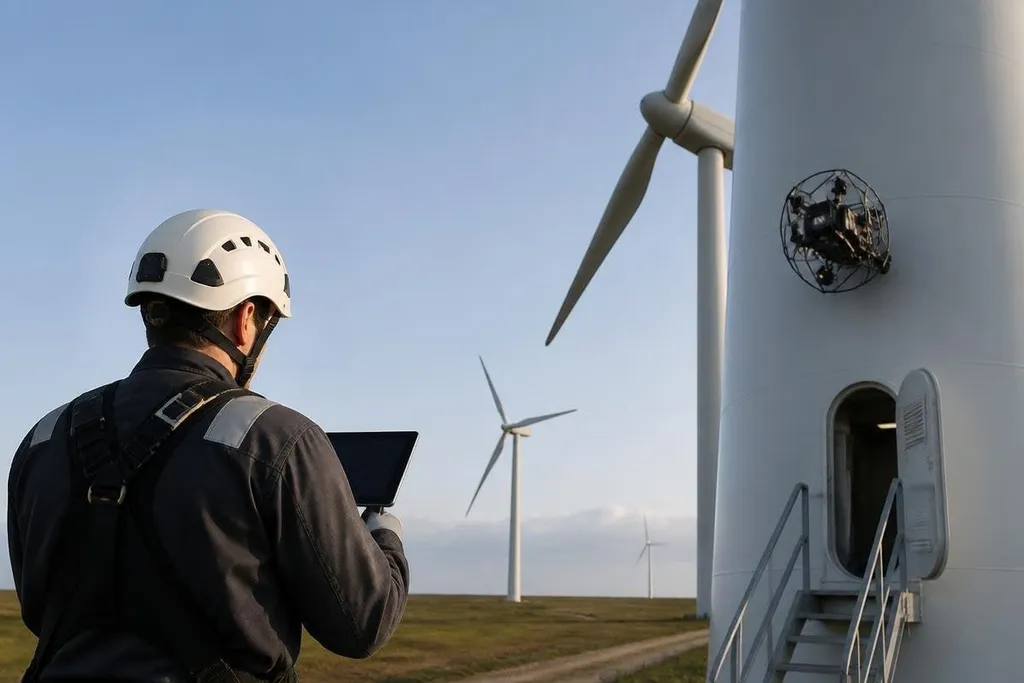
A wind turbine can place a worker high above the ground, inside a narrow tower, or close to moving blades. Robots could inspect these areas first, giving operators better information before a person starts the risky part of the job.
- Camera drones could check blades and towers from the air.
- Crawling robots could inspect surfaces while staying attached to the turbine.
- Remote control could keep workers away from damaged equipment until the site is safe.
The jobs that put people at risk
Wind farm work can involve climbing towers, reaching blade surfaces, handling heavy parts, and working near electrical equipment. A robot won't remove those hazards, but it could keep people away during the first inspection.
A drone could fly around a turbine and record images of a blade, tower, or nacelle. The nacelle is the housing at the top of the tower that contains parts such as the generator. That first pass could show cracks, loose material, or other visible damage before a technician climbs.
A ground robot could carry tools or sensors across rough ground around the turbine. This may help staff check access roads, drainage, or other areas after severe weather without sending a person into an unstable area.
How inspection robots would work
The sensor matters as much as the wheels or propellers. A normal camera records visible damage, while a thermal camera can show heat differences in electrical parts. LiDAR measures distance with laser pulses, which could help a robot map a tower or keep its position near a blade.
A crawler attached to a blade would need a grip that works on painted, curved surfaces.
It would also need a tether, battery, or other way to keep operating when wind changes. If the robot loses contact, the fall could create a new hazard below.
Remote operation may be the safer choice for early systems. A technician can guide the robot, check its images, and stop the inspection when the machine reaches a limit. More independent movement could reduce the workload, but it would need careful testing around cables, ladders, weather equipment, and people.
Robot data also needs a clear handoff. An image of a mark on a blade has little value until a trained technician can locate it, compare it with earlier images, and decide if the turbine should keep running.
Safety depends on the whole work process
Robot inspections work best when they fit the site's existing safety rules. Staff still need to isolate equipment, control access below the turbine, and confirm that a drone or crawler has left the work area before repairs start.
The same rule applies to remote operation. A person controlling a robot from a vehicle or office may be farther from the hazard, but they still need a reliable video feed, a clear stop command, and a plan for a lost connection.
A wind-farm buyer needs reports on wind-farm robots from Robot24.com. Each report should show what the machine did during inspection or maintenance, with the turbine, test date, and measured result beside the claim. A short demo can show one useful motion without proving that the robot can handle a full job.
Where the limits remain
Wind, rain, salt, ice, poor light, and signal loss can change the job. A drone may struggle to hold its position near a large blade, while a crawler may lose contact with a wet or damaged surface. Those limits need site tests before operators can rely on the machines.
A robot can also spot a defect without knowing its cause. A crack may need a closer check, a repair plan, or a shutdown decision from a qualified person. The machine gathers evidence; it doesn't take responsibility for the repair.
Costs are still hard to judge without a named robot, service plan, and site data. Operators would need to compare the full system with the current method, including training, batteries, remote control, maintenance, recovery, and the time needed to review images.
A practical buying checklist
Before a wind farm operator starts a robot inspection trial, check these points:
- Define the task: Pick one job, such as blade imaging or tower mapping, with a clear pass or fail result.
- Set the weather limits: Record the wind, rain, temperature, and light conditions the system can handle.
- Plan recovery: Decide how staff will retrieve a stuck, damaged, or disconnected robot.
- Protect the work area: Keep people clear of falling objects, moving equipment, and the robot's flight path.
- Assign the decision: Name the person who reviews the data and approves the next maintenance step.
- Measure the result: Compare inspection time, worker exposure, missed defects, and repair delays with the existing process.
What happens next
The safest route is a narrow trial with one task and a human checking every result. I'd wait for site evidence before trusting a robot with a repair decision. The open question is how much worker exposure a system can remove without adding new recovery and control risks.